
By MIKE RALEY WPTF Weekend Gardener
There is one thing we don’t have a lot of in my house and that’s houseplants. I have absolutely no reason why. I have had a pothos and a snake plant on my desk at work for many years. Of course, they are low maintenance and that’s true of ninety-nine percent of the plants in my landscape too. Now, we do buy several seasonal plants during the Christmas season. At the Campbell Road annual Christmas Open House every year we buy poinsettias, cyclamen and “holiday” cactus. Some people relish the thought of trying to sustain the life of the poinsettia and cyclamen; however, we buy these favorites every year to support our plant nursery friends and brighten up our home. They do a much better job of growing tropical plants than we do!
We do try to maintain what we know as the “Christmas” cactus around these parts, although it is more likely the “Thanksgiving” cactus. That’s right, I didn’t know either until Melissa and I read the real facts behind this relatively hardy plant we all enjoy. I don’t remember this subject being brought up before on the “Weekend Gardener” until recently. By the way, there is an “Easter” cactus too. Thank goodness for the extraordinary “Weekend Gardener” team of experts and educators with the N.C. Cooperative Extension Service for all the information they make available.
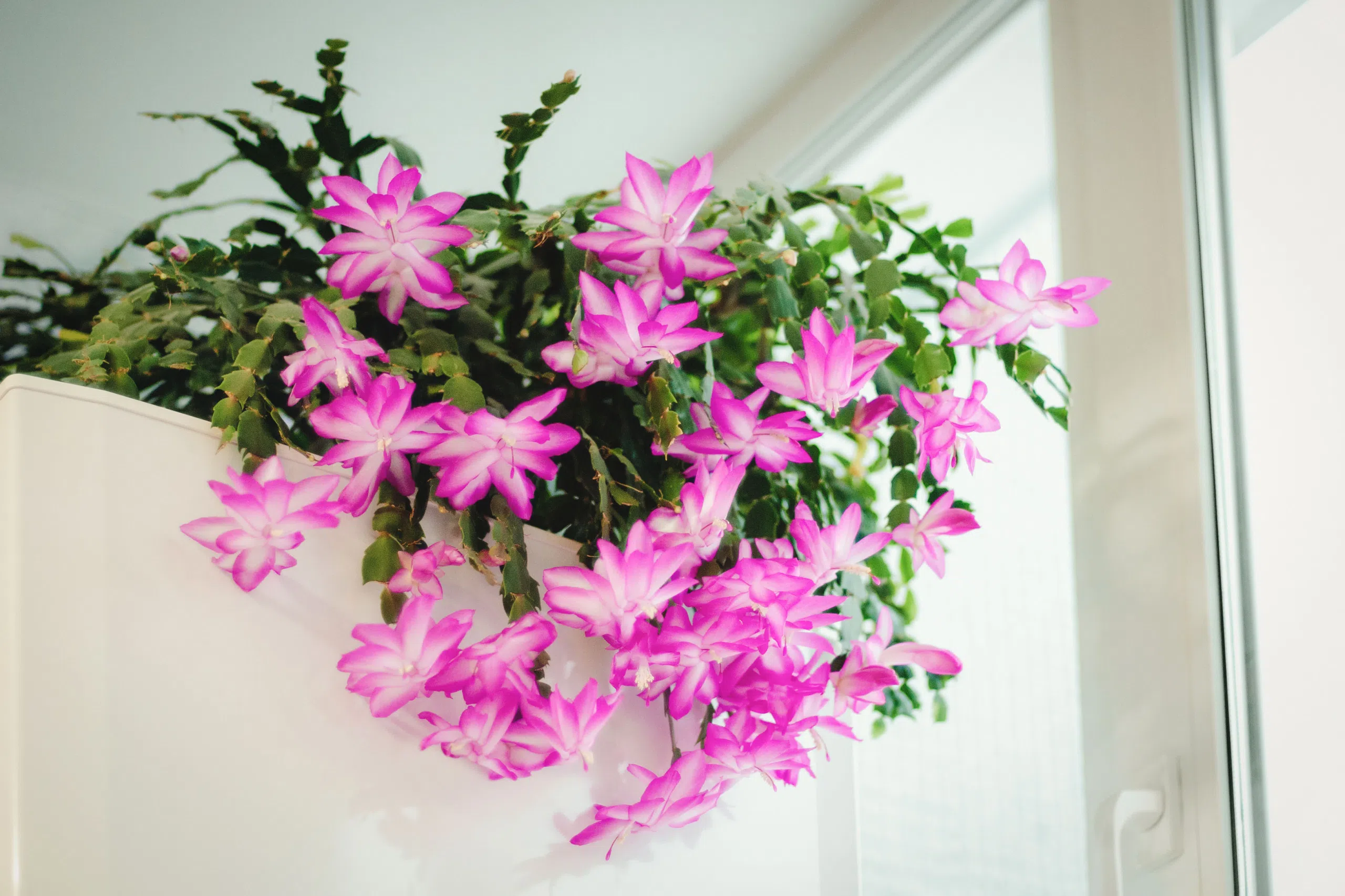
Now to the truth as we know it about “holiday” cacti. First, the “Thanksgiving” cactus or the Slumbergera truncate is what most nurseries, grocery outlets and our big box friends offer at this time of year. This specimen usually starts producing blooms in late fall if it has been cared for properly. “Thanksgiving” cactus have pointed, sharp edges, rather jagged, and I have heard them referred to as crab claw-like. Take a look at yours. That is probably the type you usually buy and it has horizontally growing flowers and has different shaped upper and lower sides. All of these cacti were developed from cactus native to Brazil. There, they grow in trees and in rock crevasses believe it or not
The “Christmas” cactus or Schlumbergera x buckleyi has sort of a scalloped leaf and we rarely see those sold around here. It starts to bloom about a month after the “Thanksgiving” varieties that are sold at Christmas. The “Easter” cactus or Rhipsalidopsis gaertneri has flat, rounded, rectangular leaves. This type starts to bloom in February if you are lucky enough to find one.
All of these cacti are known for their segmented leaf structures. There are other varieties from which the newer ones were hybridized. The flowers for these houseplants are breathtaking when in full bloom in November, December and January, again, if properly cared for. The “holiday” cactus comes in red, pink, white and there are bicolored ones too. I just love them.
Here in North Carolina, we nurture them by first placing our “holiday” cacti in bright, indirect light. It prefers a good potting mix. Of course the experts always provide that so we don’t have to worry about that. If you do, re-pot using an organic blend with perlite. Water evenly and let the soil dry well in between. Don’t over-fertilize, maybe half-strength and only during the growing season. Pinch back the stems in summer if you want to make your plant bushier. I’ve never done that.
A bit more about the light and the dark of the situation. To get your “Thanksgiving Christmas”cactus to rebloom, store in a dark, cool room for at least 13 hours a day for about 6 to 8 weeks starting in September. This will help assure the best bloom set year after year. Melissa places our “holiday” cacti outside in light shade well after the last frost and more or less forgets about them. She does not follow the prescribed hours of dark and light. Then she brings them in when it is cold and about to frost. First checking to be sure you don’t bring any bugs or frogs inside. Our experience is that once inside in the warmer temperatures, the cacti bloom profusely. This method is much easier!
I hope this helps increase your knowledge a bit so you can cherish your “Thanksgiving Christmas” cactus and not confuse you. I was confused enough when I started doing a bit of reading about this cheery plant. With a bit of tender-loving care and a little luck, you may be able to enjoy your “holiday” for many years. If not, splurge and buy a new one from your good friends at the local garden center.