
By MIKE RALEY WPTF Weekend Gardener
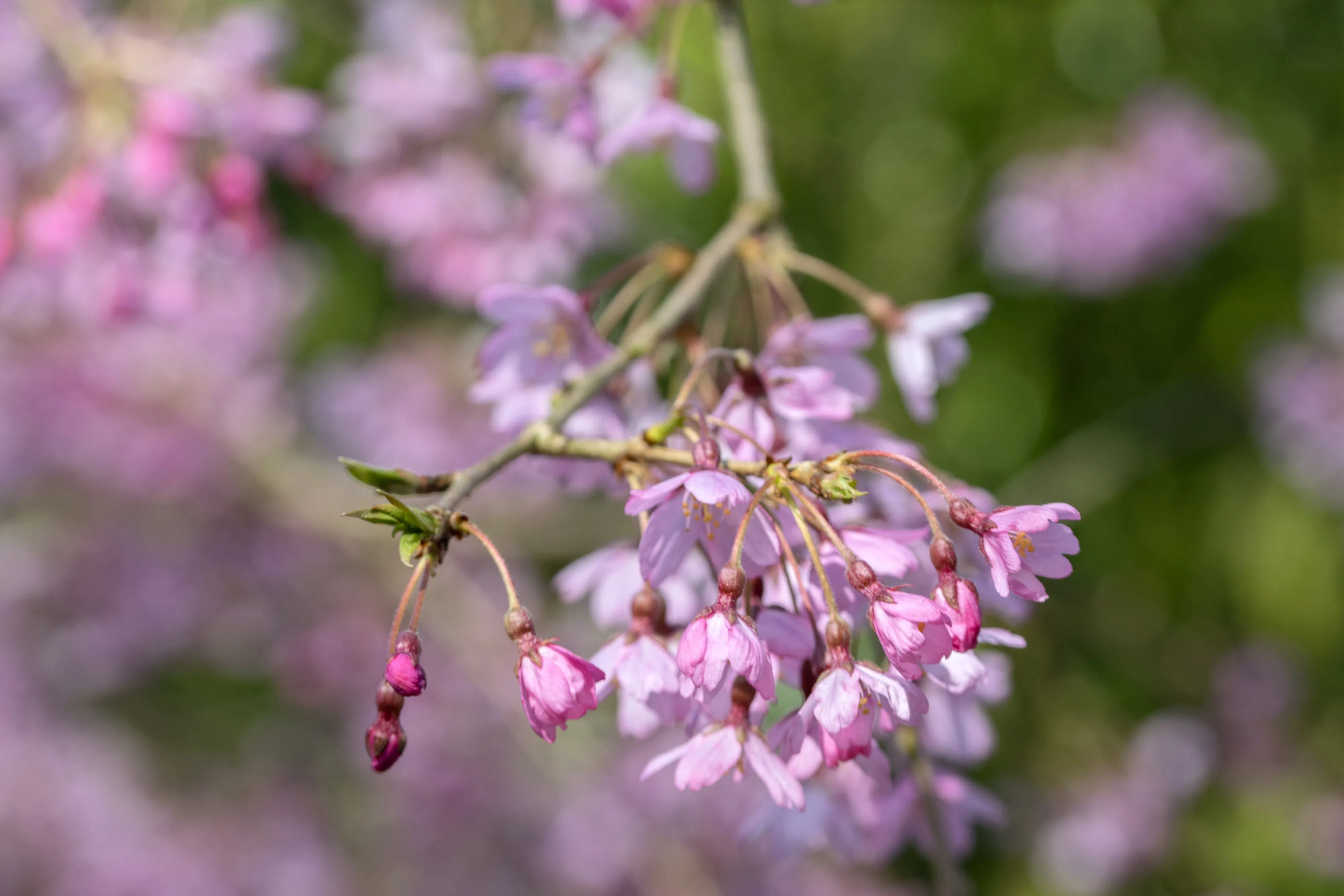
I have always been fascinated by unusual plants, trees, shrubs and flowers that I rarely see, especially those growing in North Carolina. Autumn-blooming cherry, Higan Cherry or Autumnalis Rosea (Prunus x subhurtella), is a rarity around these parts as far as I can determine. It is a native of Japan but grows well in North Carolina. This is the best cultivar to plant.
I have seen a rather rickety, irregularly shaped specimen on Highwoods Blvd, near Capital Blvd for many years and wondered about the story behind its planting. I’m always excited when I see it blooming. That means it made it another year. Of course this year, I haven’t even noticed if it is still there! From a distance, it favors a “Flowering Apricot” or Prunus Mume which is another of my favorites. The blooms are quite different when you look at them up close. They are a pale pink and rather delicate and unfortunately have no fragrance. Blooms seem to get lighter as they age.
The “Autumn Cherry,” I’m told by NC State experts, grows 20 feet or more and begins to bloom in the fall, continuing with lesser blooms throughout the winter with another burst of bloom in the spring . It seems to live longer than most cherry trees. This tree needs full sun, at least 6 hours, and likes good drainage and relatively moist soil. Place it in an area with good air circulation. Water your “Autumn Cherry” regularly for the first year in your landscape. Fortunately it is actually fairly drought tolerant.
When planting your “Autumn Cherry,” the bottom of their resting place should not be deeper than the root ball’s length. The hole should be twice the diameter of the root ball. Add some composted material like North Carolina-based Daddy Pete’s. They prefer a neutral pH, but will take some acidity in the soil.
Water the plant well and cover with native soil. Tamp it down well to prevent air pockets in the soil which can prevent good drainage and ruin the roots. Add about three inches of hardwood mulch, pine straw or chips to the base of the tree to help hold moisture and protect the root system. Don’t pile it up any higher as there’s no need to overdo it. Pull the mulch away from the trunk to protect it. It is adaptable to several different soil types including the clay and sandy soils that predominate North Carolina’s terrain.
As for insects and diseases, the “Autumnalis Rosea” is considered fairly disease resistant but you can count on a problem or two. We all seem to love to do a little pruning. For this cherry tree, do this chore in the spring after the blooms fade. During the winter you really really need to remove dead, damaged or diseased limbs. Ann Clapp used to stress using sharp and sterile pruning instruments. You also may find a pruning demonstration sponsored by your local cooperative extension service office.
If you have room for another tree in your landscape and desire a unique blooming plant then the Autumn-blooming cherry, Higan Cherry or Autumnalis Rosea is for you. You may be the first in your neighborhood to have one.